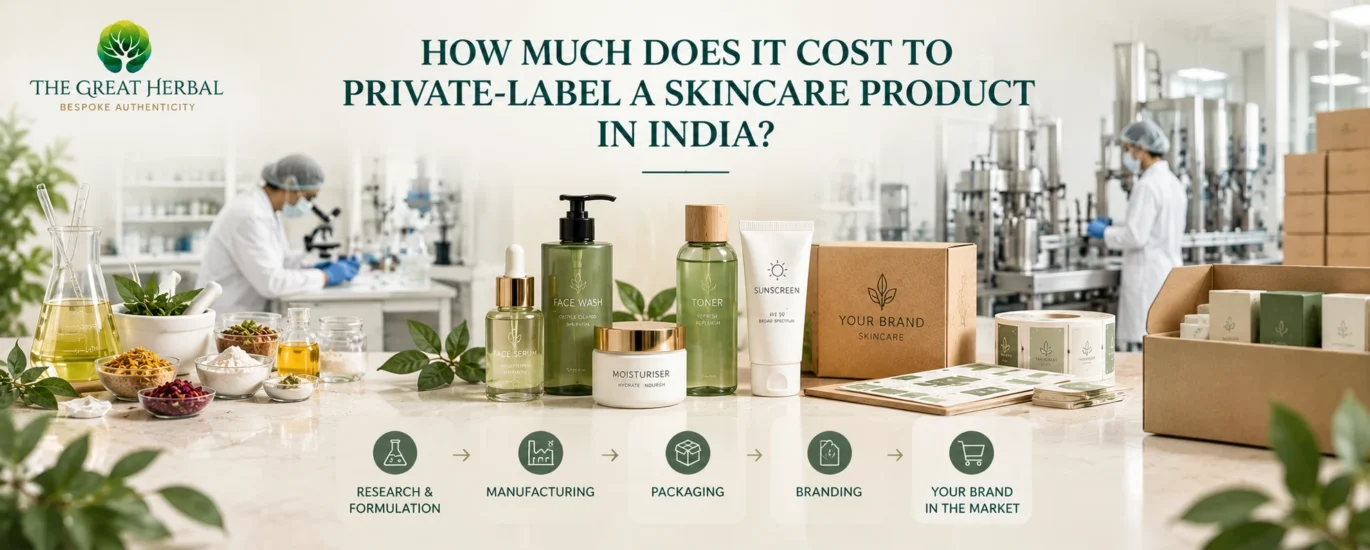
Starting a skincare brand in India has become more accessible than ever. With private-label manufacturing, you don’t necessarily need your own factory or formulation laboratory. A manufacturer can produce the product, while you sell it under your own brand name.
But one of the first questions new founders have is
How much does it actually cost to private-label a skincare product in India?
There is no fixed price because the total cost depends on the product, formulation, quantity, packaging, and level of customization. However, understanding the major cost components can help you plan your budget.
What Is Private-Label Skincare Manufacturing?
Private labelling means you select an existing or customised skincare formulation from a manufacturer and sell the finished product under your own brand.
Common private-label products include:
● Face serums
● Face washes
● Moisturisers
● Sunscreens
● Face creams
● Toners
● Body lotions
● Hair and scalp products
Instead of building a manufacturing facility yourself, you work with a third-party manufacturer to produce the product.
How Much Does a Private-Label Skincare Product Cost?
As a general estimate, the manufacturing cost of a private-label skincare product in India can range from around ₹40 to ₹250+ per unit, depending on the product and specifications.
For example:
Product Type | Approx. Manufacturing Range* |
Face Wash | ₹40–₹100/unit |
Moisturiser | ₹50–₹120/unit |
Face Serum | ₹70–₹180/unit |
Face Cream | ₹50–₹150/unit |
Toner | ₹40–₹100/unit |
Sunscreen | ₹80–₹200+/unit |
*These are indicative ranges, not fixed market prices. Actual quotations can vary significantly between manufacturers and products.
Premium ingredients, specialised formulations, larger packaging, and customised components can increase the cost.
What Determines the Cost?
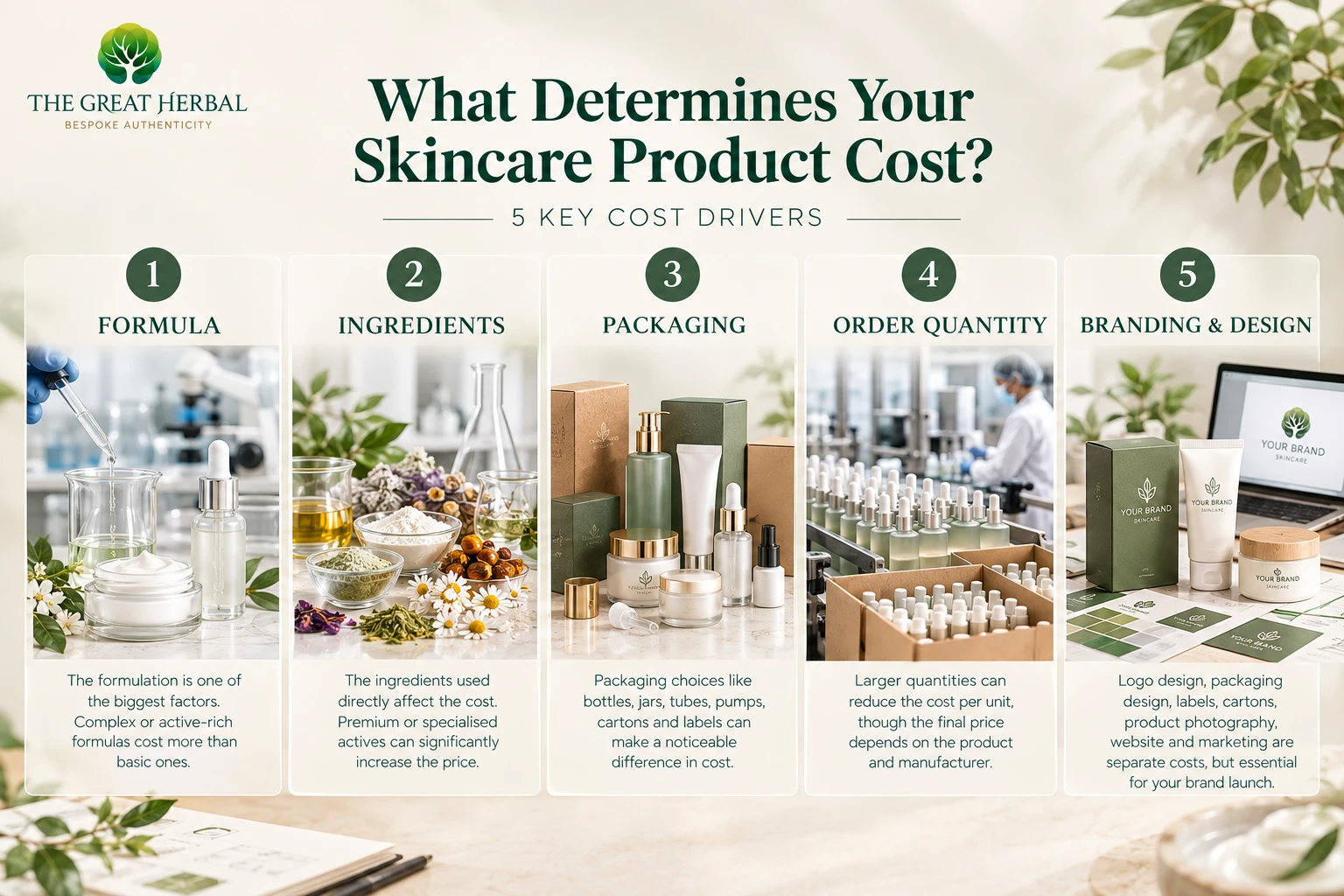
1. Product Formula
The formulation is one of the biggest factors.
A basic face wash may cost less to manufacture than a serum containing multiple active ingredients such as peptides, niacinamide, hyaluronic acid or specialised actives.
If you choose an existing formulation, the initial development cost may be lower.
A custom formulation developed specifically for your brand can involve additional R&D and testing costs.
2. Ingredients
The ingredients used in the product directly affect its cost.
For example, a simple formulation with commonly available ingredients may be relatively economical, while products using premium or specialised active ingredients can cost considerably more.
3. Packaging
Packaging can make a noticeable difference to your final product cost.
Your options may include:
● Plastic bottles
● Glass bottles
● Airless pumps
● Tubes
● Jars
● Custom cartons
● Printed labels
A simple stock bottle with a label will generally cost less than a premium glass bottle with a customized box.
4. Order Quantity
Your order quantity also affects the economics.
A manufacturer may offer different pricing at:
● 500 units
● 1,000 units
● 3,000 units
● 5,000+ units
Larger production quantities can sometimes reduce the manufacturing cost per unit, although this depends on the product and manufacturer.
5. Branding and Design
Remember that manufacturing cost isn’t the same as your total launch cost.
You may also need to budget for:
● Logo design
● Packaging design
● Labels and cartons
● Product photography
● Website
● Marketing and advertising
These expenses are separate from the product manufacturing cost.
Example: What Could a Small Launch Cost?
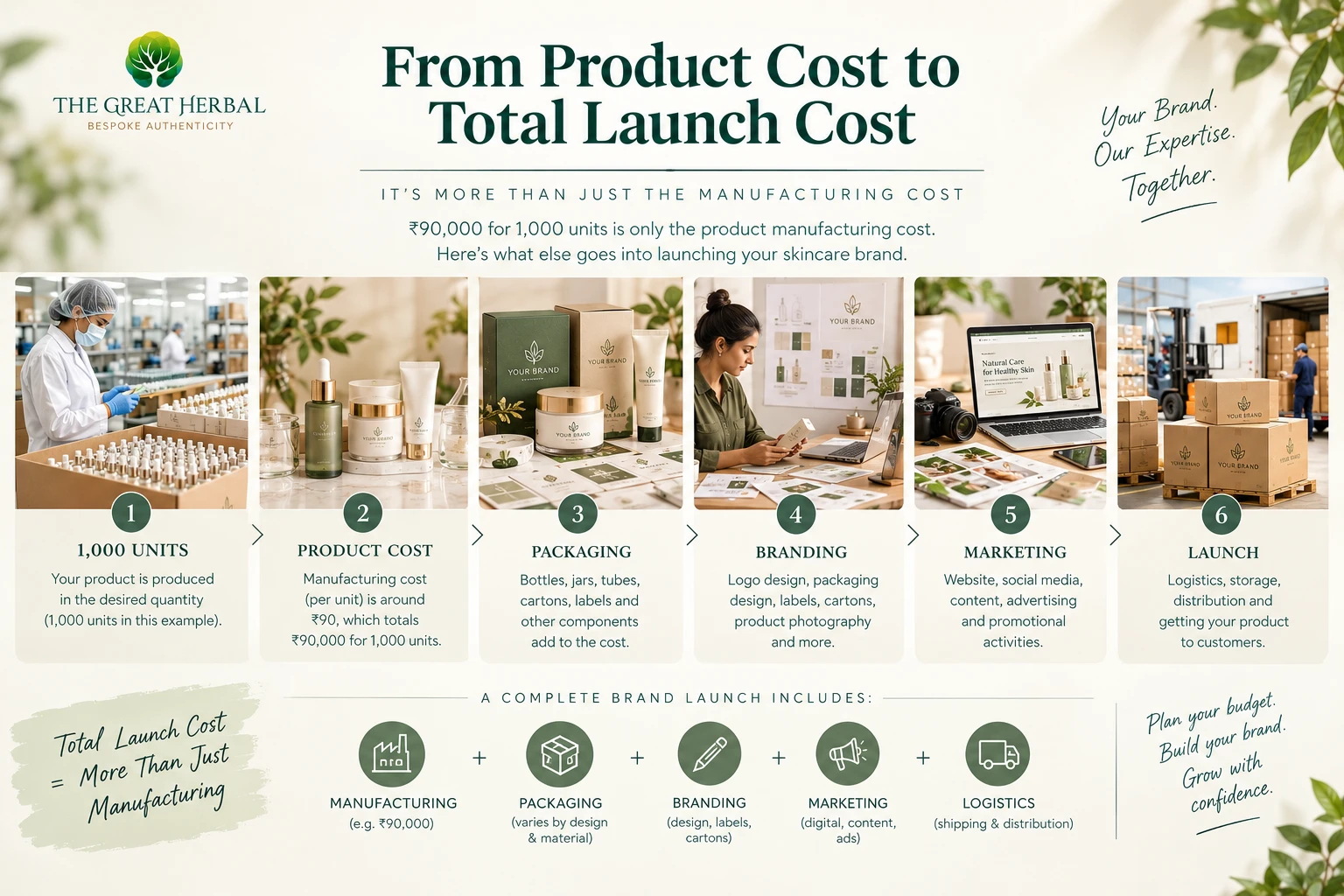
Suppose you want to launch 1,000 units of a face serum.
A simple example could look like:
● Product manufacturing: ₹90/unit
● 1,000 units: ₹90,000
● Packaging/design/branding: additional
● Marketing: additional
So, the product itself could cost approximately ₹90,000, while your complete brand-launch budget would be higher after adding packaging, branding, logistics, marketing and other expenses.
This is why founders should calculate the total landed cost, rather than looking only at the manufacturer’s per-unit price.
Is Private Label Cheaper Than Manufacturing Your Own Product?
For most new brands, private labeling can be a more accessible way to enter the skincare market because you don’t have to establish your own manufacturing infrastructure.
You can focus your investment on:
Product → Branding → Marketing → Sales → Customer Experience
Instead of investing heavily in:
Factory → Machinery → Staff → Production → Quality infrastructure
However, the exact economics depend on your product, quantity, and business model.
What Should You Ask a Manufacturer Before Ordering?
Before placing an order, ask for a detailed quotation covering:
● Product manufacturing cost
● Minimum order quantity (MOQ)
● Packaging cost
● Label/carton cost
● Custom formulation charges, if applicable
● Testing/documentation charges
● Taxes
● Shipping or transportation
● Expected production timeline
This helps you avoid unexpected costs later.
Final Thoughts
There is no single price for private-label skincare products in India. As a broad starting point, manufacturing can range from approximately ₹40 to ₹250+ per unit, depending on the product and specifications.
For a new brand, the smartest approach is to compare manufacturers based on quality, formulation, packaging, MOQ, documentation and total cost, rather than choosing purely on the lowest per-unit price.
A well-planned private-label launch can allow you to start with a manageable quantity, test your product in the market and gradually increase production as your brand grows.