
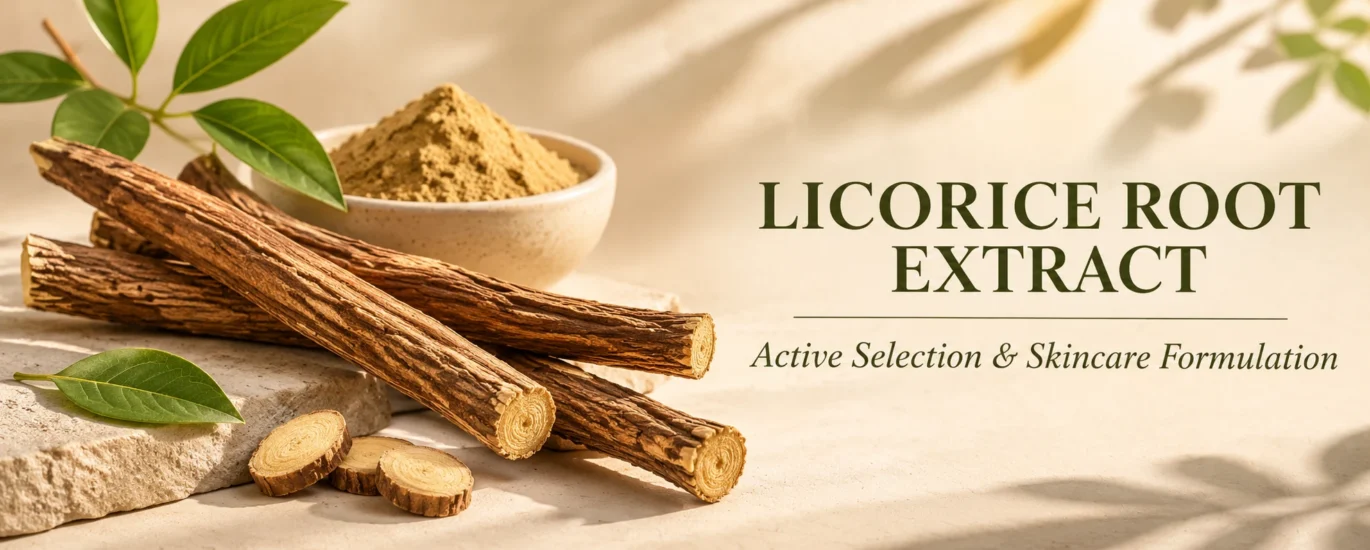
The skincare industry continues to explore botanical actives that help address common concerns such as uneven skin tone, dullness and visible pigmentation. Among these ingredients, licorice root extract in skincare has gained attention for its skin-brightening potential, antioxidant properties and versatility in cosmetic formulations.
Derived from the roots of Glycyrrhiza glabra and related species, licorice root extract contains bioactive compounds that can support the development of targeted skincare products. For cosmetic brands, selecting the right extract and incorporating it into a stable, effective formulation are essential steps in product development.
At The Great Herbal, we help skincare brands explore botanical ingredients and cosmetic third-party manufacturing solutions to develop products aligned with their target audience and brand positioning.
What Is Licorice Root Extract in Skincare?
Licorice root extract is a botanical ingredient obtained from licorice plant roots. It is widely used in cosmetic formulations designed for skin brightening, soothing and antioxidant support.
Its properties depend on the plant species, extraction method, solvent system and standardisation of the finished ingredient. Different extracts can contain varying concentrations of active compounds, making ingredient selection particularly important for formulators.
Some of the key compounds associated with licorice root extract include:
- Glabridin: A flavonoid studied for its potential role in influencing melanin-related pathways and providing antioxidant activity.
- Liquiritin: A flavonoid investigated for its potential contribution to improving the appearance of uneven pigmenatation.
- Glycyrrhizin: A naturally occurring compound associated with several biological activities and commonly discussed for its soothing potential.
- Licochalcone A: A licorice-derived compound studied for its antioxidant and skin-soothing properties.
Not every licorice extract contains all these compounds in meaningful concentrations. Therefore, cosmetic brands should evaluate the ingredient’s technical specifications before selecting it for a particular product.
Key Licorice Root Extract Benefits for Skin
Understanding the potential benefits of licorice root extract can help brands identify suitable product categories and establish more informed ingredient positioning.
1. Helps Improve the Appearance of Uneven Skin Tone
One of the most recognised applications of licorice root extract is in skincare products targeting dullness and uneven pigmentation.
Certain compounds, particularly glabridin, have been investigated for their potential to influence tyrosinase activity, an enzyme involved in melanin production. Liquiritin has also been studied for its potential role in improving the appearance of pigmentation.
These properties make licorice root extract an ingredient worth exploring in face serums, moisturisers and products designed for a more even-looking complexion. However, results depend on the extract, formulation and supporting clinical evidence.
2. Provides Antioxidant Support
Licorice contains naturally occurring compounds with antioxidant activity. Antioxidants are relevant to skincare because oxidative stress is associated with environmental exposure and visible signs of skin ageing.
Incorporating a suitably characterised licorice extract into a cosmetic formula may support antioxidant-focused product positioning. The actual performance should be established through appropriate ingredient data and finished-product testing.
3. Supports Skin-Soothing Formulations
Certain licorice-derived compounds have been studied for their soothing potential. This makes licorice root extract an interesting option for formulations designed for skin comfort and daily conditioning.
Brands may consider it for moisturisers, calming serums and products intended for skin that feels stressed by environmental factors. Claims relating to sensitive skin or reduced irritation should be supported by suitable safety and efficacy evidence.
4. Creates Opportunities for Botanical Skincare
Consumers interested in plant-derived ingredients may find licorice-based skincare appealing because it combines botanical positioning with research into pigmentation and skin conditioning.
For brands, this creates opportunities to develop ingredient-led products that address specific consumer concerns while maintaining a clear, evidence-based approach to product claims.
Licorice Root Extract: How to Select the Right Active
Licorice root extract formulation begins with choosing the right raw material. The ingredient’s botanical source, active composition and delivery system influence its suitability for a particular product.
Consider the following factors when selecting a licorice extract.
- Active compound standardisation: Review whether the extract is standardised for glabridin, glycyrrhizin or another relevant marker. The appropriate specification depends on the intended cosmetic function.
- Extraction method: Water, glycerin, alcohol and other solvent systems can produce extracts with different compositions and formulation characteristics. Choose a grade compatible with the planned product.
- Solubility and compatibility: Confirm whether the selected extract is water-soluble, oil-soluble or supplied in a carrier system. This determines how it can be incorporated into the formula.
- Supplier documentation: Obtain the technical data sheet, certificate of analysis, recommended use level and relevant safety documentation from the supplier.
- Regulatory suitability: Verify the ingredient’s permitted use, applicable restrictions and requirements in the intended sales market. Cosmetic claims should remain within the applicable regulatory framework.
Selecting an extract based only on its botanical name may not be sufficient. The precise grade and its documented characteristics matter.
Licorice Root Extract in Cosmetic Formulation
Licorice root extract can be explored in several cosmetic product formats, depending on the extract’s solubility, stability and compatibility with the formulation.
- Skin-brightening serums: Designed to address the appearance of uneven skin tone and dullness.
- Face creams: Developed to combine moisturisation with botanical skin-conditioning ingredients.
- Pigmentation-focused formulations: Created around ingredients selected to improve the appearance of uneven pigmentation.
- Calming moisturisers: Designed to support skin comfort and daily moisturisation.
- Face masks: Incorporated into suitable rinse-off or leave-on formulations, depending on the product design.
Important Formulation Considerations
Recommended concentration: Determine the inclusion level from supplier guidance, the extract’s active content and formulation trials. There is no single universal concentration suitable for every licorice extract.
pH compatibility: Evaluate the stability of the extract and the complete formulation within the intended pH range.
Colour and odour: Botanical extracts can influence the finished product’s colour, aroma and appearance. These characteristics should be assessed during development.
Stability and preservation: Test the formulation under appropriate storage conditions. Water-based products require a suitable preservation system and microbiological evaluation.
Packaging compatibility: Assess packaging for compatibility with the finished product and its expected shelf life.
These considerations help manufacturers develop products that meet the intended sensory, quality and performance requirements.
Ingredients That Complement Licorice Root Extract
Licorice root extract can be explored alongside other cosmetic actives to develop formulations with complementary functions.
- Niacinamide: Commonly used in products targeting uneven-looking skin tone and supporting the skin barrier.
- Vitamin C derivatives: Considered in antioxidant and skin-brightening formulations, subject to compatibility and stability.
- Hyaluronic acid: Used to support hydration and improve the skin’s moisturised appearance.
- Panthenol: Incorporated into skin-conditioning formulations designed to support comfort and moisturisation.
Ingredient combinations should be assessed for compatibility, stability and finished-product performance rather than assumed to be effective simply because the ingredients are combined.
Develop Licorice-Based Skincare Products with The Great Herbal
At The Great Herbal, we support brands looking to develop and manufacture skincare products featuring botanical extracts and targeted cosmetic actives, including licorice root extract, subject to ingredient availability and formulation feasibility.
Whether you are planning a skin-brightening serum, a daily moisturiser, a botanical face cream or a complete skincare range, our cosmetic third-party manufacturing services can help you explore product development options tailored to your brand.
From ingredient selection and formulation planning to packaging considerations and manufacturing requirements, we work with brands to translate their product concepts into commercially relevant skincare solutions.
Ready to Develop Your Licorice Root Skincare Range?
Partner with The Great Herbal for cosmetic third-party manufacturing. Share your product concept, preferred format and target audience with our team to explore suitable licorice root extract formulations for your brand.
Contact The Great Herbal today to discuss your skincare product development requirements and take the next step towards launching your own botanical skincare range.


