

Introduction
The cosmetics market is increasingly competitive. Consumers pay closer attention to product quality, safety, ingredients, packaging, and the credibility of the company behind the product.
For cosmetic brands, choosing the right manufacturing partner is a critical business decision. Strong branding cannot compensate for inconsistent quality or weak manufacturing practices.
This is where a GMP-compliant cosmetic manufacturer becomes important. GMP manufacturing helps brands maintain consistent production standards, improve product safety, reduce manufacturing risks, and build consumer confidence.
What Does GMP Mean in Cosmetic Manufacturing?
GMP stands for Good Manufacturing Practices. These standardized practices ensure that products are manufactured and controlled under consistent conditions.
In cosmetic manufacturing, GMP includes:
- Clean and hygienic production facilities
- Proper raw-material management
- Documented manufacturing procedures
- Consistent production processes
- Quality-control testing
- Skilled technical staff
- Safe storage and packaging
A GMP-certified manufacturer follows defined procedures throughout production to minimize contamination, errors, and quality variations. For cosmetic brands, this supports safer products, dependable quality, and greater consumer confidence.
Importance of GMP in Cosmetic Manufacturing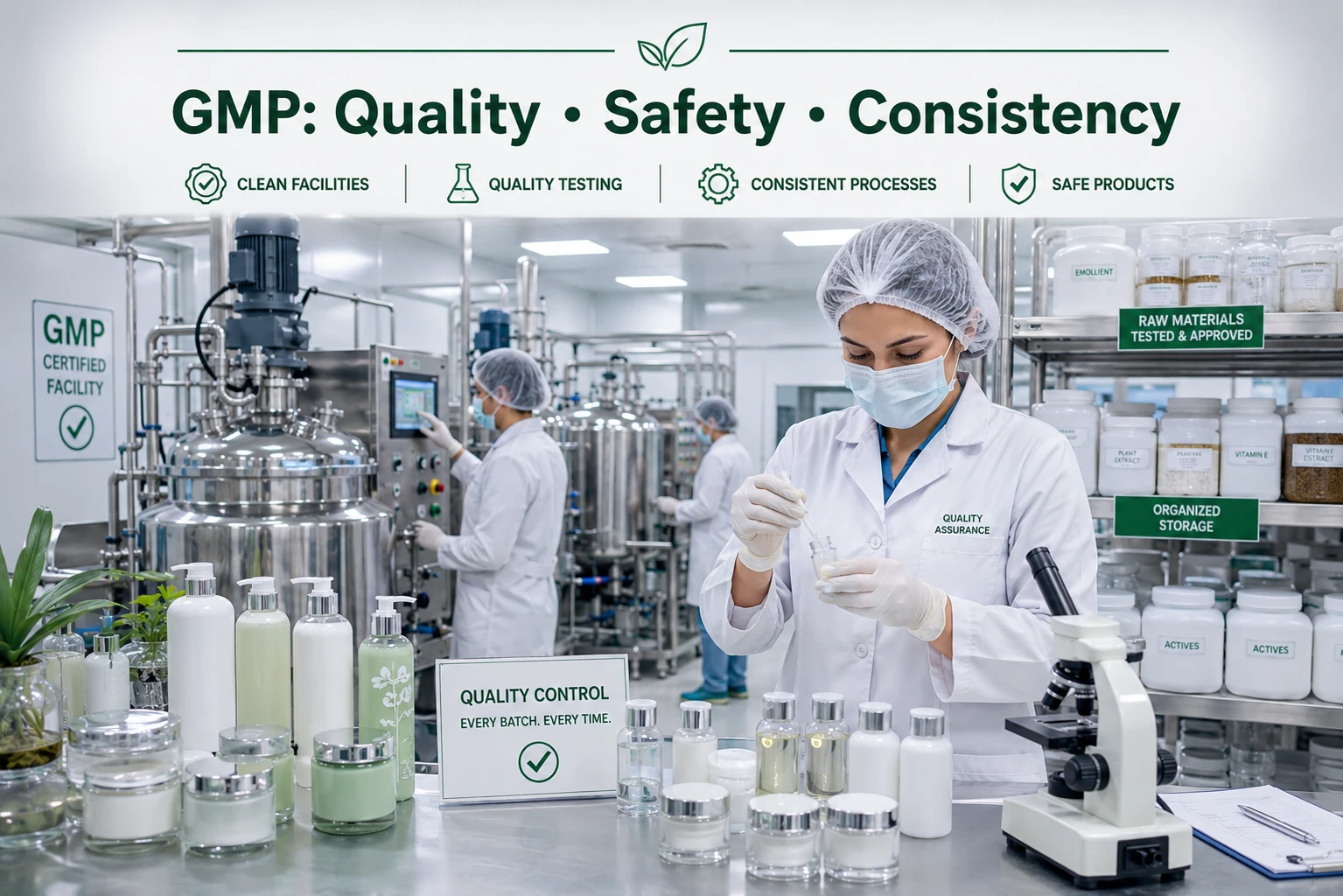
Safety: Cosmetics come into contact with the skin, hair, eyes, and sometimes the mouth. GMP practices help reduce contamination and manufacturing-related risks.
Consistency: Customers expect every batch to deliver the same texture, fragrance, color, and performance. Standardized processes help maintain batch-to-batch consistency.
Consumer Confidence: GMP practices can strengthen a brand’s professional reputation and consumer trust.
Fewer Manufacturing Errors: Controlled processes, documentation, proper measurements, and storage help minimize contamination, incorrect labeling, and production errors.
Regulatory Support: GMP-based manufacturing and proper documentation can help brands meet applicable requirements as they enter new markets.
GMP vs. Non-GMP Manufacturer: What Is the Real Difference?
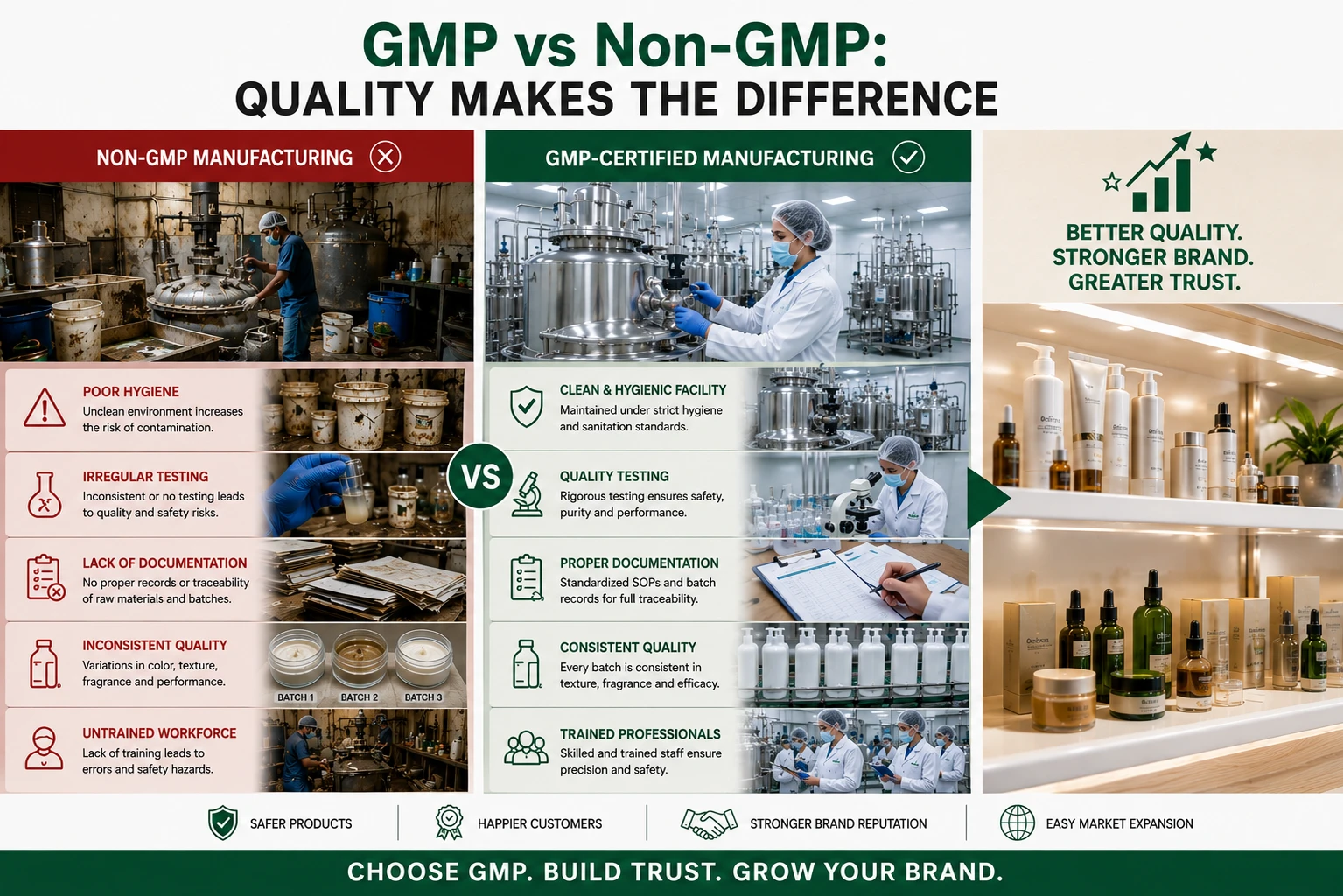
Many brands compare manufacturers based on price, but the bigger difference lies in quality systems, reliability, documentation, and long-term risk.
GMP-Certified Manufacturer
- Defined hygiene and sanitation procedures
- Documented manufacturing processes
- Consistent batches
- Appropriate quality testing
- Trained technical staff
- Better traceability and documentation
Non-GMP Manufacturer
- Hygiene standards may vary
- Processes may not be standardized
- Product consistency can be difficult to maintain
- Testing may be limited or irregular
- Professional expertise may be inconsistent
- Weak record management and traceability
A lower manufacturing price may appear attractive initially, but quality problems can result in complaints, returns, customer dissatisfaction, compliance challenges, and brand damage
How a GMP-Certified Cosmetic Manufacturer Strengthens Your Brand
Improves Brand Reputation: Consistent quality and reliable manufacturing practices help build a stronger reputation and customer trust.
Increases Customer Retention: Consistent product performance encourages repeat purchases and recommendations.
Supports Premium Positioning: Premium skincare, haircare, and personal-care brands need manufacturing standards that support their quality positioning.
Reduces Complaints and Returns: Better quality control helps minimize defects and inconsistencies that can lead to negative reviews and refunds.
Supports Brand Expansion: Established manufacturing systems help brands scale production while maintaining consistency.
Why Brands Prefer a Third-Party GMP Cosmetic Manufacturer
Setting up an in-house cosmetic manufacturing facility requires major investment in machinery, manpower, testing equipment, certifications, and infrastructure. Third-party manufacturing gives brands access to established production capabilities without the full cost of building their own facility.
Key advantages include:
Faster Product Launch: Existing systems can reduce development and production timelines.
Professional Expertise: Formulation, R&D, production, and quality-control teams can support product development.
Production Scalability: Manufacturers can increase production capacity as demand grows.
Greater Focus on Branding: Outsourcing allows brands to focus on marketing, sales, packaging, customer acquisition, and brand building.
Key Things to Check Before Choosing a GMP-Certified Manufacturer
Before selecting a manufacturing partner, evaluate:
- Manufacturing infrastructure and hygiene
- GMP certification and relevant compliance standards
- Experience in skincare, haircare, herbal, Ayurvedic, or personal-care products
- Raw-material and finished-product testing
- Custom formulation and product-development support
- Packaging capabilities and customization options
Common Risks of Choosing a Non-GMP Manufacturer
Choosing a low-cost manufacturer without strong quality systems can create long-term risks, including contamination, inconsistent quality, customer complaints, poor packaging, recalls, compliance issues, and damage to brand reputation.
The Future of GMP in the Cosmetic Industry
Consumers are becoming more ingredient-conscious and quality-focused. As expectations around safety, transparency, and consistency increase, GMP-based manufacturing is becoming increasingly important for sustainable growth.
Conclusion
The real difference a GMP-certified manufacturer makes to your brand lies in quality, safety, consistency, and trust.
A GMP-certified cosmetic manufacturer can help reduce manufacturing risks, maintain reliable product quality, support regulatory requirements, and strengthen customer confidence. For brands planning to grow in beauty and personal care, choosing a third-party GMP cosmetic manufacturer is a long-term investment in brand credibility and growth.


