
Let’s be real for a second—running a D2C beauty brand in 2026 is exciting, but it comes with its fair share of hurdles. And if you’ve already started, you’ve probably noticed something: manufacturing can either make your brand… or break it.
So let’s talk about it—together.
In this guide, we’ll walk through the biggest D2C cosmetic manufacturing challenges and how you can actually solve them (without feeling overwhelmed).
Why Manufacturing Matters More Than Ever
Quick question for you:
Would you repurchase a product that looked amazing but didn’t perform well?
Probably not—and neither will your customers.
In today’s fast-moving D2C world, your product quality is your strongest marketing tool. Social media might get you noticed, but consistent results keep customers loyal.
That’s why getting manufacturing right isn’t optional anymore—it’s essential.
The Biggest D2C Cosmetic Manufacturing Challenges
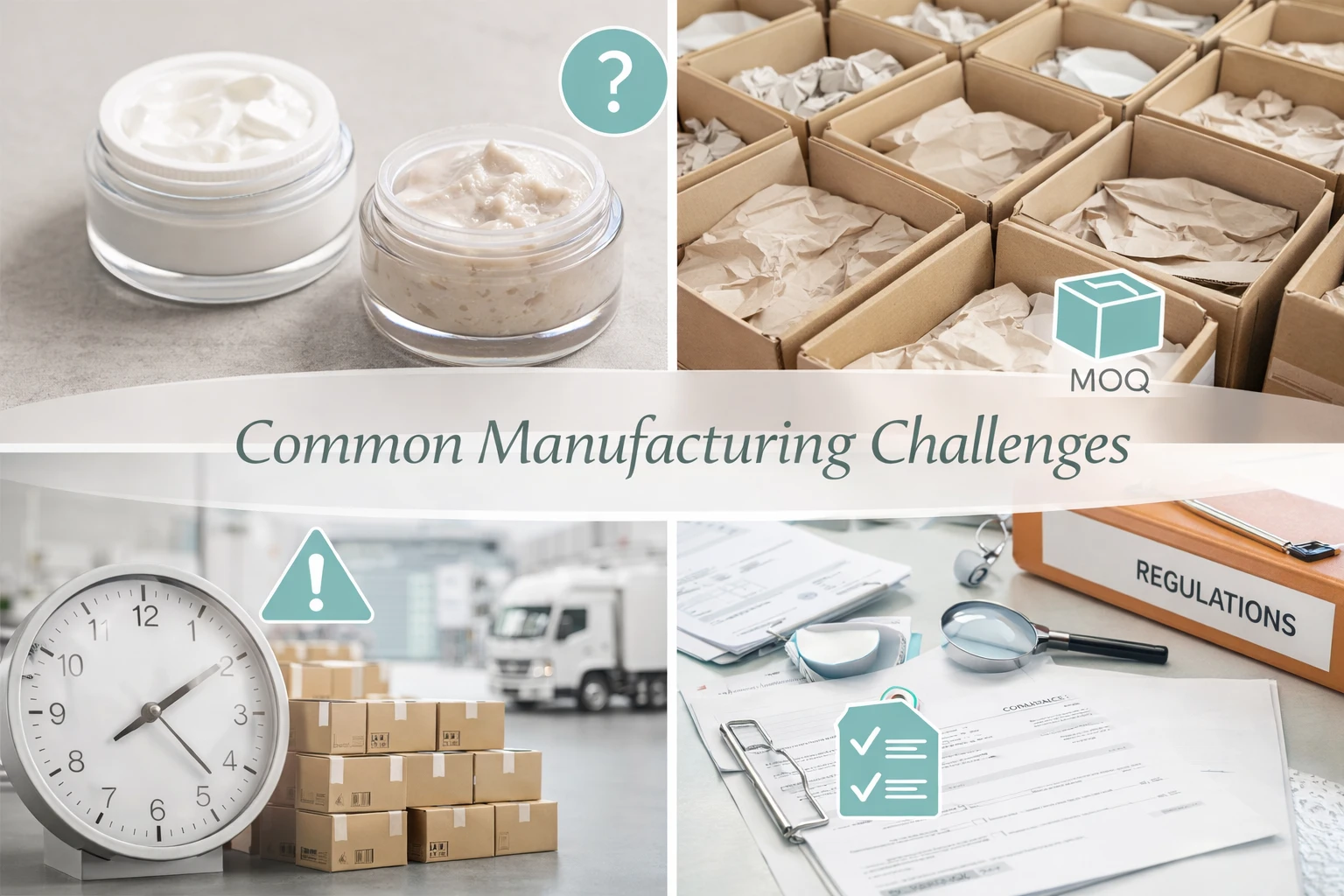
Let’s break this down into the most common issues brands face—and see how they show up in real life.
1. Finding the Right Manufacturing Partner
This is where most brands struggle first.
You’ll find countless suppliers online, but here’s the real challenge: figuring out who you can actually trust.
You might be wondering:
- Will they maintain quality?
- Can they scale with my growth?
- Will they deliver on time?
Choosing the wrong partner can lead to delays, poor product quality, and wasted money.
What works better?
Partnering with a reliable cosmetic third-party manufacturer who understands D2C brands. Look for transparency, flexibility, and a proven track record.
2. Maintaining Consistent Product Quality
Let’s say your first batch is amazing. Customers love it. Sales pick up.
Then suddenly… your next batch feels different.
Sound stressful?
Consistency is one of the most common challenges in D2C cosmetic manufacturing. It usually happens because of the following:
- Raw material variations
- Weak quality control
- Lack of standardised processes
How to fix it:
- Always approve samples before full production
- Set clear quality benchmarks
- Work with manufacturers who follow strict QA processes
Your customers expect the same experience every time—your manufacturing should deliver that.
3. Dealing with High Minimum Order Quantities (MOQs)
Here’s something almost every founder struggles with:
You want to test a product, but manufacturers require large upfront orders.
That means:
- Higher investment
- Risk of unsold inventory
- Less flexibility
So what’s the smarter move?
Look for a cosmetic third-party manufacturer that offers low MOQs or pilot batch options. This allows you to test the market before committing big.
In D2C, being flexible is more valuable than going big too soon.
4. Navigating Compliance and Regulations
Let me ask you this:
Are your products fully compliant with every market you sell in?
If you’re unsure, you’re not alone—but this is one area you can’t ignore.
Cosmetic regulations can include:
- Ingredient restrictions
- Labeling rules
- Safety testing
Missing even one requirement can cause serious setbacks.
What helps:
- Work with experienced manufacturers who understand compliance
- Stay updated on changing regulations
- Keep proper documentation
Think of compliance as your brand’s safety net.
5. Scaling Without Losing Control
Growth is exciting—but it can also create chaos if you’re not prepared.
Let’s say your product suddenly goes viral. Orders flood in.
Now what?
Without proper systems, scaling can lead to:
- Production delays
- Quality issues
- Supply shortages
How to stay in control:
- Plan for scale early
- Choose a cosmetic third-party manufacturer with scaling experience
- Build backup supplier options
Growth is great—but only if your backend can keep up.
6. Managing Supply Chain Uncertainty
If recent years have taught us anything, it’s that supply chains are unpredictable.
From raw material shortages to shipping delays, disruptions can happen anytime.
So how do you stay prepared?
- Diversify your suppliers
- Maintain buffer stock
- Forecast demand carefully
It’s not about avoiding problems—it’s about being ready for them.
How a Cosmetic Third-Party Manufacturer Can Help
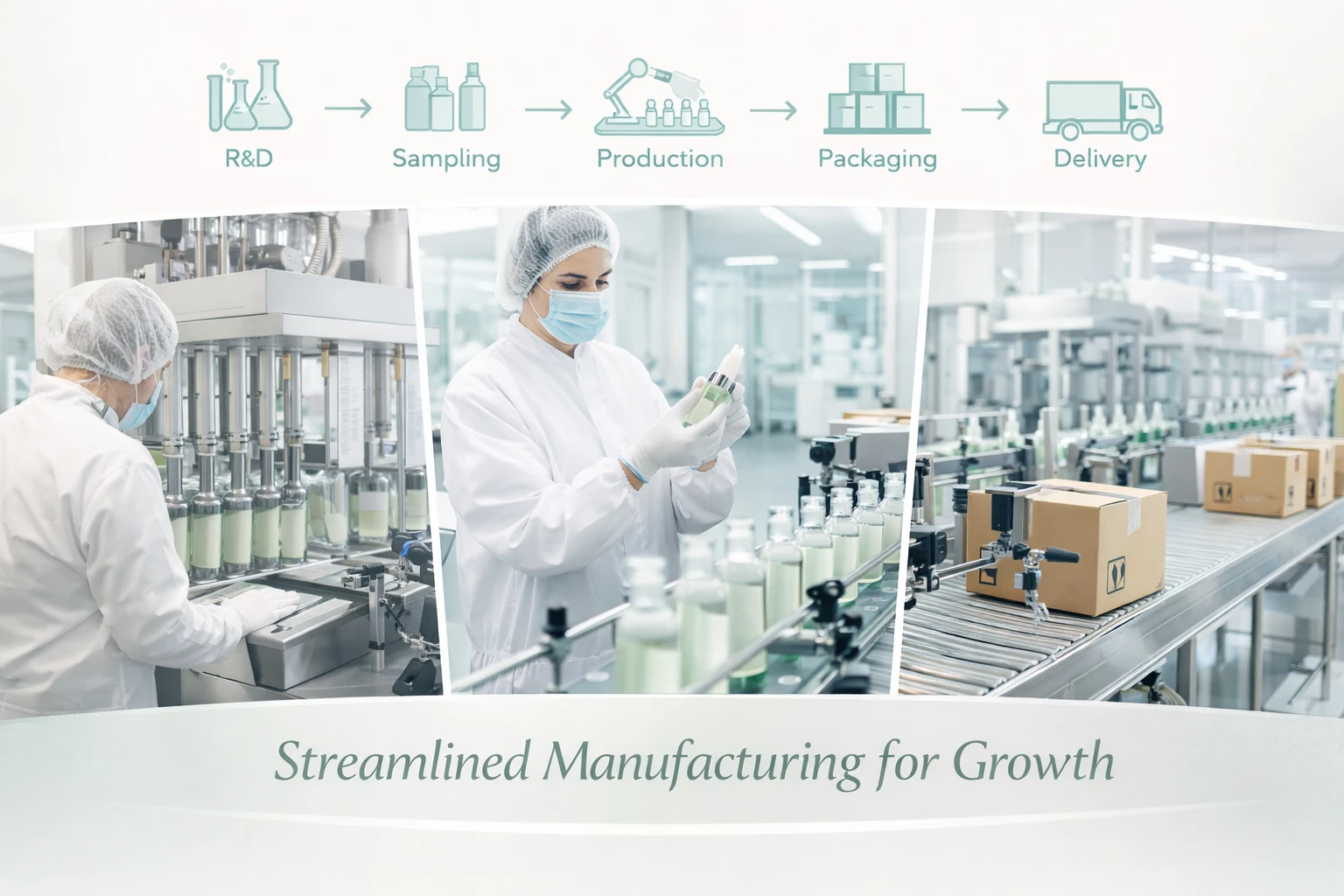
Let’s flip the perspective for a moment.
What if you didn’t have to manage all of this alone?
A trusted cosmetic third-party manufacturer can simplify your entire process.
Here’s how:
- Expertise: They understand formulations, processes, and industry standards
- Efficiency: Faster production and shorter time to market
- Cost Savings: No need to invest in infrastructure
- Scalability: Easy expansion as your brand grows
- Compliance Support: Built-in regulatory knowledge
In short, they let you focus on what you do best—building your brand.
Pro Tips for D2C Cosmetic Brands in 2026
Before we wrap up, here are a few practical tips you can apply right away:
Start Small and Test
Don’t rush into large production runs. Validate your product first.
Focus on Your Strengths
Let manufacturing experts handle production while you focus on marketing and customer experience.
Build Strong Relationships
Treat your manufacturer as a long-term partner, not just a vendor.
Stay Customer-Focused
At the end of the day, your success depends on customer satisfaction.
Final Thoughts
The truth is, D2C cosmetic manufacturing challenges aren’t going away anytime soon. But they don’t have to hold you back.
With the right strategy—and the right cosmetic third-party manufacturer—you can turn these challenges into opportunities for growth.
So let me ask you one last question:
What’s the one manufacturing challenge you’re facing right now?
Because once you identify it, you’re already one step closer to solving it.
And that’s how strong D2C brands are built.