Introduction
The cosmetic industry has been growing at a rapid pace over the last decade with brands constantly launching new skincare, haircare, and personal care products. Many of these brands have products developed and manufactured efficiently by a third-party cosmetic manufacturer. The cosmetic industry is very competitive. So it is very important that the products are good and safe to use. The cosmetic industry needs to make sure that products are safe.
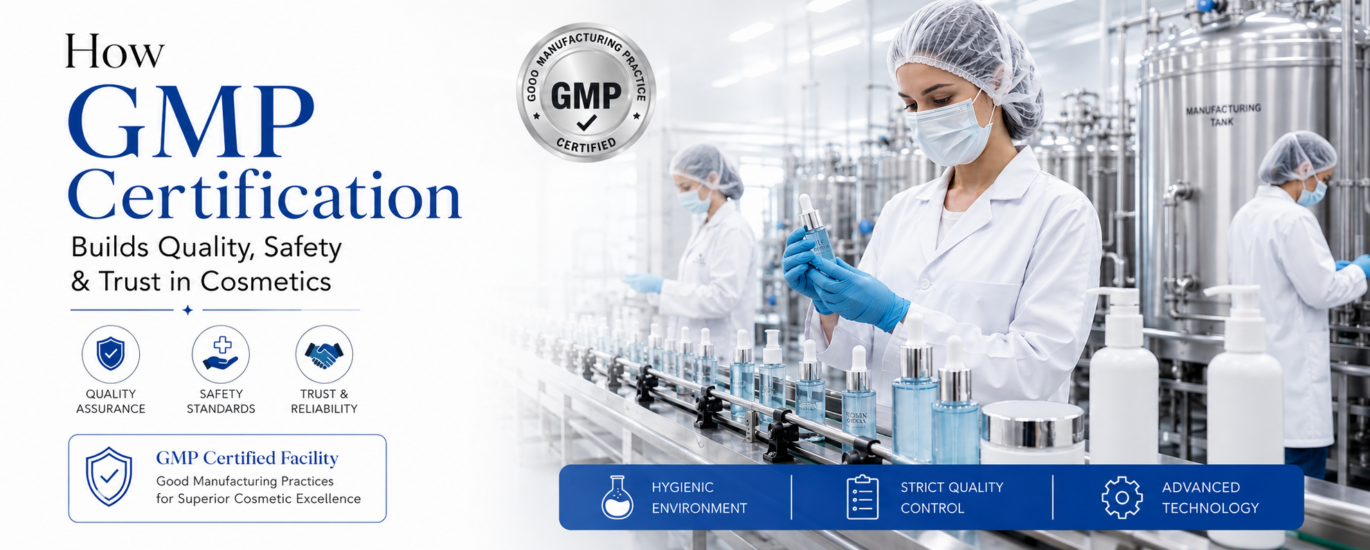
For a cosmetic third-party manufacturer, GMP Certification is more than a regulatory compliance. This is a reflection of the effort to produce safe, reliable and high quality cosmetic products in accordance with international manufacturing standards. For those brands who collaborate with third party manufacturers, it is vital for them to know that the products are made in hygienic conditions and with proper standardized methods of manufacturing.
Good Manufacturing Practice (GMP) enables manufacturers to ensure consistency, prevent contamination, increase efficiency, and gain the trust of their clients and consumers.
What Is GMP Certification in Cosmetic Manufacturing?
GMP Certification refers to a process which ensures that the products are always produced and controlled in a consistent manner following certain quality requirements.
As regards cosmetics, some important points on which GMP standards pay attention include the following:
● Clean and hygienic manufacturing facilities
● Proper treatment of raw materials
● Standardized manufacturing procedures
● Training of staff and hygiene
● Quality control and tests
● Safe packaging and labelling
● Traceability and documentation
A GMP-certified cosmetic manufacturer is one where all products are made in a controlled environment to ensure safety, consistency, and compliance with regulations.
For brands that outsource their manufacturing, partnering with a GMP-certified manufacturer offers the assurance that their products will meet market expectations and legal requirements.
How GMP Standards Improve Product Quality
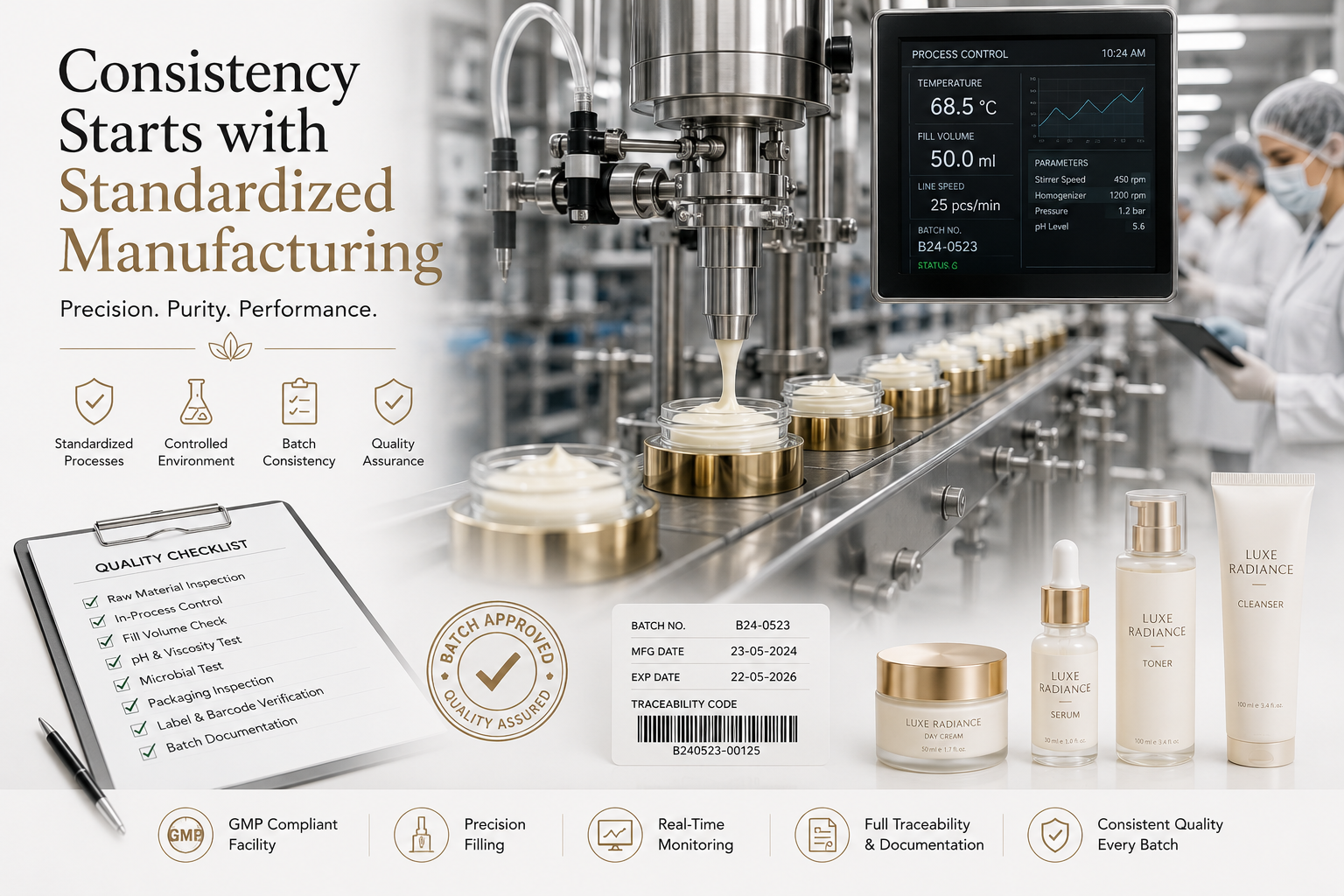
One of the biggest concerns for cosmetic brands and consumers is product quality. Poor quality products can damage a brand’s reputation and lead to dissatisfaction among customers. GMP standards allow cosmetic third-party manufacturers to ensure quality is consistent throughout the manufacturing process.
Standards for manufacturing processes
One of the most important advantages of GMP Certification is it forces the introduction of standardized manufacturing procedures. All cosmetic products have to be manufactured from approved formulas, with controlled measurements and documented methods.
For instance, in the production of face creams, serums, or shampoos, GMP certified manufacturers follow strict guidelines regarding:
● Ingredient quantities
● Mixing temperatures
● Processing times
● Packaging methods
● Storage conditions
This consistency ensures that every product batch delivers the same texture, fragrance, appearance, and performance.
Quality Raw Materials and Supplier Certification
High-quality cosmetic products start with high-quality ingredients. All raw materials are inspected by GMP-certified cosmetic manufacturers prior to their use in production.
Includes:
● Supplier approval and verification process
● Ingredients testing
● Inspections in batches
● Store under the following conditions
Manufacturers can reduce the probability of defects and contamination in their products by controlling the quality of raw materials.
Better Documentation and Traceability
GMP standards require full documentation at each stage of production. Each ingredient, process step, and quality inspection must be recorded properly.
This helps cosmetic third-party manufacturers:
● Track product batches efficiently
● Identify issues quickly
● Improve accountability
● Manage product recalls effectively if needed
Traceability is especially important in cosmetics because consumers are highly conscious about product safety and ingredient transparency.
How GMP Certification Enhances the Safety of a Product
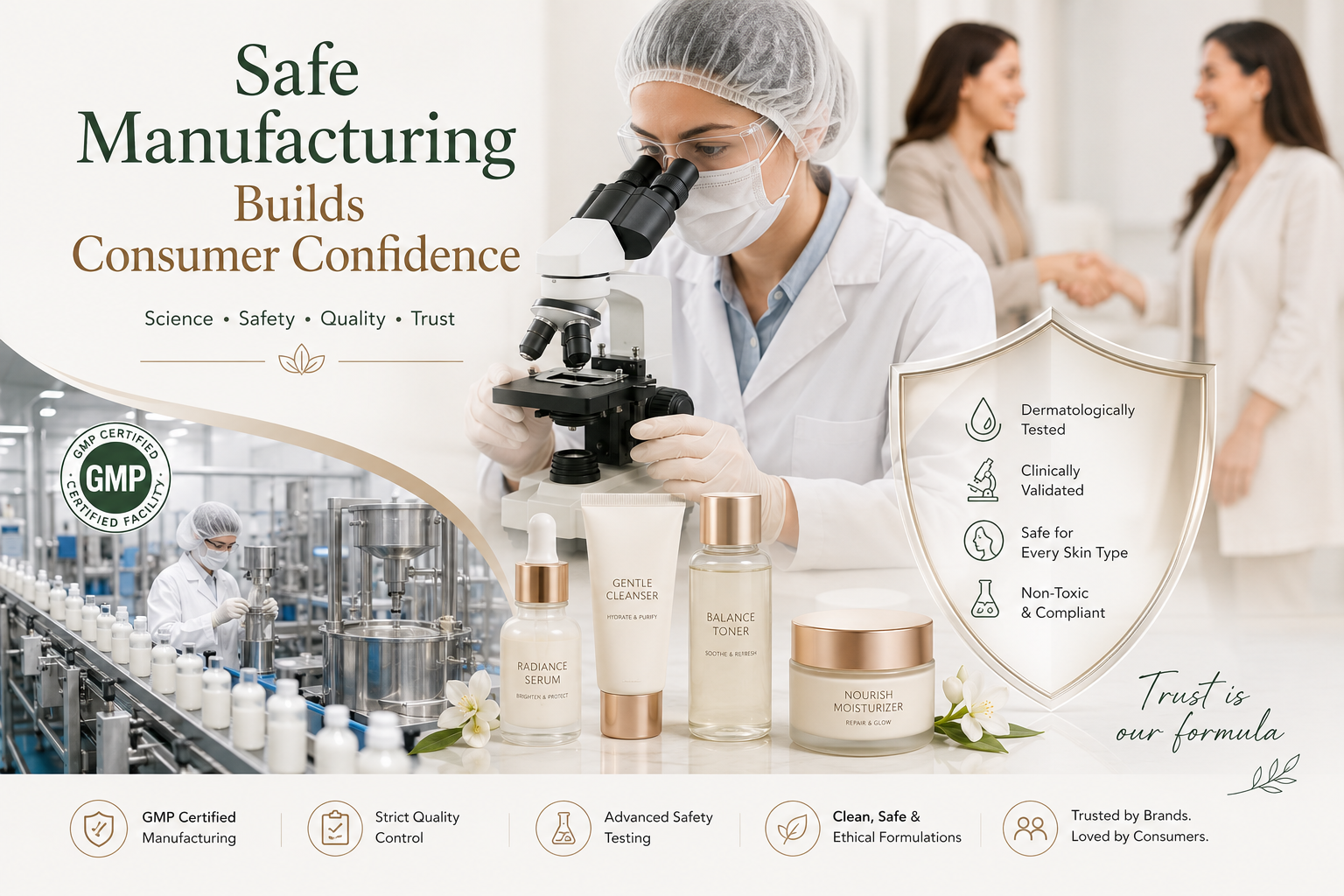
The safety of the products is of the utmost importance in the manufacturing of cosmetics, as these products are in direct contact with the skin. If the products are not safe, one can get skin allergies, irritations, infections and others.
GMP Certification ensures that the cosmetic manufacturers observe high levels of safety in their manufacturing process.
Maintaining Hygiene and Clean Manufacturing Conditions
In a GMP-certified cosmetic production facility, hygiene must be maintained during all operations.
This includes:
● Equipment sanitation
● Controlled production environments
● Cleaning procedures
● Proper waste disposal systems
● Pest control management
Maintaining hygiene reduces the risk of microbial contamination and makes sure products remain safe for consumer use.
Employee Training and Operational Discipline
Employees are crucial to the quality and safety of cosmetic manufacturing. Regular staff training in proper manufacturing practices is a GMP standard.
Training programs usually include:
● Personal hygiene practices
● Equipment handling
● Safety protocols
● Quality control procedures
● Documentation systems
Well-trained employees help reduce production errors and maintain consistent manufacturing standards.
Continuous Quality Control and Testing
GMP-certified cosmetic manufacturers perform quality checks throughout the production process instead of relying only on final product testing.
These quality control measures may include:
● Stability testing
● Microbial testing
● Packaging inspections
● Formula verification
● Environmental monitoring
Continuous testing helps identify problems early and prevents defective products from reaching the market.
Why Cosmetic Brands Prefer GMP-Certified Third-Party Manufacturers
Today, cosmetic companies are very careful when selecting manufacturing partners. Choosing a reliable cosmetic third-party manufacturer today requires GMP certification to be one of the most important factors.
Regulatory Compliance
Most countries require cosmetic products to be manufactured in accordance with GMP standards prior to being sold legally. GMP-certified manufacturers help brands to meet these regulatory needs seamlessly.
Building Brand Reputation
Product quality and safety are among the most important factors in a brand’s reputation. Partnering with a GMP-certified manufacturer enables brands to provide reliable products and maintain customer satisfaction.
Reduced Manufacturing Risks
GMP systems reduce the chances of contamination, packaging errors and formulation inconsistencies and thus minimize the risk of product recalls and customer complaints.
Global Market Opportunities
International distributors and retailers prefer products manufactured in GMP certified factories. Certification makes it easier for cosmetic brands to enter global markets.
Consumer Trust and Confidence
Consumers today are paying close attention to the safety of ingredients and manufacturing standards. Products manufactured in GMP conditions can increase consumer trust and loyalty.
How GMP Certification Builds Long-Term Market Trust
The trust factor is one of the most powerful drivers of business growth in the cosmetic industry. Consumers want to know that the products they use are safe, effective and responsibly made.
GMP Certification assists cosmetic third party manufacturers build trust in the following ways:
● Proven commitment to international quality standards
● Reliability and consistency of the product
● Keeping manufacturing practices transparent
● Ensuring our consumers receive safe products
● Sustaining long-term collaborations with cosmetic brands
GMP Certification is a sign that a third-party manufacturer is professional, operates at the highest levels, and is committed to quality manufacturing.
Conclusion
GMP certification is an essential element of third-party manufacturing in the cosmetics industry since it improves product quality, guarantees consumer safety, and builds consumer trust. Where the success of the products is directly linked to their reputation, there is a need for the GMP standards to be strictly followed.
Furthermore, GMP certification is an important element for all third-party manufacturers in the cosmetics industry, since it guarantees high-quality manufacturing while at the same time ensuring that credible cosmetic companies can be attracted through its credibility.
For more information on global GMP certification, kindly read the WHO GMP Guidelines, available at World Health Organisation (WHO) GMP Guidelines