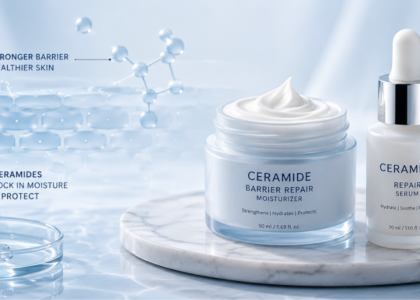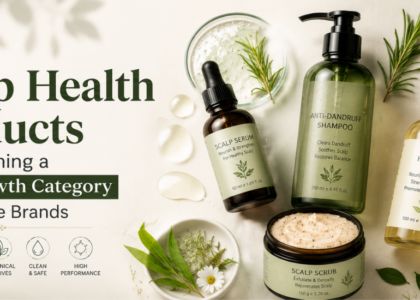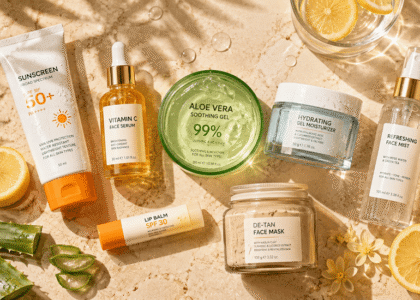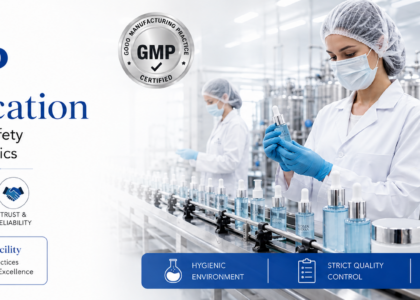

Ever wondered how your favorite skincare or makeup products are developed before they reach your vanity or retail shelves? The answer lies in third-party cosmetic manufacturing, a specialized business model where expert manufacturers create products for beauty brands under their label.
Also known as cosmetics contract manufacturing, private label cosmetics manufacturing, or OEM cosmetics manufacturing, this model forms the backbone of today’s global beauty industry.
From high-performance serums and trendy makeup lines to herbal and organic skincare, most brands rely on Good Manufacturing Practices (GMP) – certified cosmetic manufacturers and custom cosmetic manufacturers to deliver safe, innovative, and market-ready products.
One of the trusted players in this space is The Great Herbal, renowned for blending advanced cosmetic science with natural, herbal formulations. With proven expertise across skincare, haircare, and makeup, The Great Herbal supports brands in launching high-quality, compliant, and consumer-loved beauty products.
In this blog, we will take you inside the industry to explain how third-party cosmetic manufacturing works. You will discover a complete step-by-step cosmetic manufacturing process, from concept and formulation to packaging and delivery, giving you a clear view of how beauty ideas transform into shelf-ready products.
Key Benefits for Cosmetic Brands
Choosing third-party cosmetic manufacturing is not just about outsourcing-it’s about gaining a competitive edge.
For beauty and skincare brands, this model allows them to focus on storytelling, branding, and customer engagement, while expert manufacturers handle the technical side of production.
- Lower Capital Investment & Faster Market Entry: Building a factory can take years and demand huge financial resources. By working with third-party manufacturers, brands can skip the setup phase and get their products on shelves within weeks.
- Access to Advanced Research & Development: Third-party manufacturers come with specialized R&D teams that track evolving skincare and beauty trends; whether its actives like peptides and niacinamide or demand for clean, herbal formulations. This ensures products stand out in a crowded market.
- Regulatory Expertise & Compliance Assurance: With GMP-certified processes, third-party partners guarantee that formulations meet strict safety and quality standards. This protects brands from compliance risks and strengthens consumer trust.
- Scalability & Flexibility: Startups and established players alike benefit from the ability to scale. Brands can begin with small batches for market testing and increase production seamlessly as demand grows.
- Global Market Readiness: The right partner ensures that packaging, labeling, and certifications align with U.S., EU, and Indian standards. This makes it easier for brands to expand beyond borders without worrying about legal hurdles.
- Local Advantage in India: With India’s rich tradition in herbal beauty, manufacturers bring the added value of Ayurvedic expertise, competitive MOQs, and cost-effective production-making them a strong choice for brands eyeing both domestic and global markets.
- Why reinvent the wheel when experts can build the car for you?
Step-by-Step Process of Third-Party Cosmetic Manufacturing
Now, let’s simplify the end-to-end cosmetic manufacturing process into 11 easy-to-understand steps.

Step 1: Ingredient Selection & Customize Formulation Development
The journey starts with an in-depth consultation between your brand and the manufacturer. This is where you define your vision, whether you want to launch a serum, shampoo, lipstick, soap, or herbal cosmetic range.
Together, you decide on hero ingredients, target skin or hair type, desired claims (hydrating, anti-acne, de-tan, anti-aging, etc.). This is also where customize formulation development comes in, allowing you to fine-tune actives, textures, and certifications (vegan, cruelty-free, organic) to create a formula unique to your brand.
Pro tip: Bring 2–3 competitor benchmarks and clearly define your must-haves vs. nice-to-haves. This upfront clarity makes formulation smoother and saves costly revisions later. Clarity today saves revisions tomorrow.
Step 2: Ingredient Sourcing
At this stage, the R&D and formulation team proposes standard formulations (faster and cost-effective) or customized formulations (unique and exclusive to your brand).
Raw materials are chosen based on stability, compatibility, fragrance profile, preservatives, and compliance with target market regulations.
Pilot lab batches are prepared to adjust viscosity, texture, and spreadability, while balancing active percentages. This ensures the formulation is not only effective but also safe and enjoyable to use.
Step 3: Sampling & Product Approval
Once ingredients are shortlisted, the lab creates samples for you to test. You will evaluate sensorials like texture, fragrance load, shade match (for makeup), rinse-off, and after-feel. Your feedback is crucial, and the lab will iterate until the sample meets your expectations.
Some manufacturers also run accelerated stability and compatibility checks at this stage (heat exposure, UV testing, or freeze–thaw cycles) to predict long-term performance. This step ensures your product is safe, stable, and market-ready.
Step 4: Product Costing & Finalizing Business Modalities
With an approved sample, you will receive a detailed quotation covering formula cost, packaging, filling, decoration, and testing. At this stage, you confirm the minimum order quantity (MOQ), per-unit price, and billing arrangements (e.g., advance deposit with balance before dispatch).
Be mindful of cost drivers such as premium actives, high fragrance load, luxury packaging (like airless pumps), or certifications. This is where the contract manufacturing process aligns with your business model and ROI goals.
Step 5: Packaging & Designing
Packaging is more than just a container, it’s your silent brand ambassador. Here, you select pack formats (tubes, jars, airless bottles), materials (PCR plastics, glass, aluminum), and decorations (silk-screen, hot foil, labels).
Regulatory-compliant artwork is finalized, including INCI ingredient names, safety warnings, net weight, country of origin, and expiry dates. Brands like The Great Herbal with a sustainability focus often opt for mono-materials, refill systems, or FSC-certified cartons.
Step 6: FDA Compliance
Cosmetic compliance varies across markets. In the U.S., products must follow FDA cosmetic labeling and safety guidelines (though no pre-approval is needed). In the EU, a PIF/CPSR dossier is mandatory along with CPNP notification. In India, certain categories require CDSCO registration.
Your third-party manufacturer guides you through testing (stability, microbiological, safety) and claim validation to ensure smooth regulatory approval. This step prevents compliance issues, relabeling, or recalls later.
Step 7: RMPM Sourcing
Once compliance is in place, sourcing of Raw Materials and Packaging Materials (RMPM) begins.
Manufacturers procure ethically sourced, traceable ingredients often RSPO-certified, COSMOS/ECOCERT compliant, and cruelty-free. Packaging components are also sourced and inspected for quality and compatibility.
Certificates of Analysis (CoAs) are obtained for every batch to ensure raw materials meet safety, purity, and performance standards. This ensures transparency and accountability across the supply chain.
Step 8: Bulk Production & Manufacturing
Once raw materials and packaging are ready, production begins. The facility undergoes line clearance and sanitation to maintain hygiene.
Ingredients are blended in large reactors, with strict controls on temperature, shear, and mixing to ensure formula stability. In-process checks, such as pH, viscosity, and consistency, guarantee accuracy at every stage.
Filling is then carried out under hygienic conditions into the selected packaging, whether jars, tubes, or pumps. This stage is the heart of OEM cosmetics manufacturing, where small lab samples become large-scale batches ready for market. Precision in the tank equals perfection in the bottle.
Step 9: Quality Assurance
Every batch undergoes rigorous QA testing for appearance, texture, odor, pH, microbial safety, and preservative efficacy. Documentation includes Certificates of Analysis, batch records, and traceability logs to maintain transparency.
Most reliable manufacturers are certified under ISO 22716, GMP, Vegan, Cruelty-Free, and FDA compliance frameworks, assuring that your products meet both domestic and international quality standards.
Step 10: Finished Goods (FG)
Once QC-approved, products move to the final stage of packing. Labels with mandatory details, INCI list, batch number, Mfg./Exp. date, net weight, safety warnings, and barcodes, are applied.
This is where your brand identity comes alive through design, fonts, and finishing touches, making the product shelf-ready. It completes the private label cosmetic manufacturing process, ensuring your brand is not only compliant but also visually compelling.
Step 11: Logistics & Delivery
The final stage is all about safe and timely delivery. Products are carefully packed into shipper cartons with protective cushioning and, if required, humidity control. The manufacturer arranges dispatch through reliable freight partners, sharing packing lists, invoices, and tracking details.
Some manufacturers also assist with third-party logistics (3PL) or direct distribution to your retailers. Proper insurance, Incoterms, and secure handling ensure your products reach their destination without compromise. Made with care. Delivered with confidence.
Types of Cosmetic Products Manufactured by Third Parties
Third-party manufacturers like The Great Herbal cater to a wide spectrum of cosmetic categories, ranging from everyday essentials to luxury, niche, and specialized solutions.
Their expertise spans across skincare, haircare, herbal formulations, and beyond, ensuring brands of all sizes can find products that match their identity and customer needs.

Quality isn’t where you make it; it’s how you manage it.
Cost Structure & Pricing Factors
Understanding the cost dynamics of third-party cosmetic manufacturing is crucial for strategic planning and profitability. These costs are shaped by choices you control; from formulation to fulfillment, and can be optimized through smart decisions.
1. Formulation & Ingredient Costs
What it includes: Development of proprietary formulas, active ingredients (peptides, antioxidants, novel plant extracts), preservatives, and fragrances.
Why it matters: The complexity and potency of actives directly influenceper-unit costs. Fully customized formulations are more expensive due to the additional R&D, testing, and intellectual property involved, whereas modifying existing stock formulations is more cost-efficient.
2. Packaging & Decoration
What it includes: Containers (jars, tubes, airless bottles made of glass, aluminum, or PCR plastic), labeling, printing, decoration (foil stamping, embossing).
Why it matters: Packaging not only protects the product but also builds brand perception. Premium options like glass, refillable systems, or sustainable PCR (Post-Consumer Recycled) materials significantly raise costs, while simpler packs offer a more budget-friendly route.
3. Testing & Compliance
What it includes: Microbial testing, stability testing, preservative efficacy testing (challenge tests), SPF testing, claims substantiation, and regulatory dossier preparation.
Why it matters: Regulatory compliance is non-negotiable in markets such as the U.S., EU, and India. Proper testing ensures consumer safety, prevents recalls, and helps secure certifications that boost brand credibility.
4. Volume, MOQ & Economies of Scale
Small batches cost more per unit due to setup costs and inefficiencies.
Larger runs reduce material costs and leverage line efficiencies. Medium-to-large brands often secure price advantages via bulk purchasing and higher volumes.
5. Operational & Overhead Costs
Operational costs go beyond formulation and packaging.
They include essential supplies such as pumps, caps, fillers, and labeling materials, as well as labor costs for skilled technicians and quality control teams.
On top of that, logistics expenses, covering freight, warehousing, and insurance; add to the overall budget.
Industry benchmarks suggest that for larger cosmetic companies, raw materials and packaging typically account for 30–40% of total operational spending, while labor, technology, and logistics together contribute another 30–35%.
Note: These ranges are approximations modeled for mid-sized beauty companies and may vary based on product complexity, brand positioning, and manufacturing location.
Final Thought
Now that you have seen how third-party cosmetic manufacturing works, you can choose the route that fits your brand: fast private label, distinctive OEM, or a hybrid approach.
The right partner transforms ideas into compliant, consumer-loved products on time and on budget.
And if you are looking for a reliable partner, The Great Herbal is a strong choice.
With their expertise in herbal, organic, and modern beauty solutions, they exemplify the best of third-party skincare manufacturing processes quality-driven, trend-conscious, and globally compliant.
Whether you are launching a serum line or scaling a full beauty routine, the step-by-step cosmetic manufacturing process above turns concepts into cartons with quality, compliance, and consistency baked in.